The Birth of Racing at High Yarridge
Hexham Racecourse holds a unique place in British racing history as the northernmost National Hunt sporting arena in England. Perched at 223 metres above sea level on High Yarridge, the course has tested horses and delighted racegoers since its first meeting on Wednesday 23 April 1890.
The racecourse owes its existence to Charles William Chipchase Henderson, a Durham businessman whose family founded the Durham Carpet Company. Henderson came from a prominent political family; his father John had served as Member of Parliament for Durham City. Beyond his business acumen, Henderson was an accomplished sportsman who excelled at polo, cricket, and rowing. When he resolved to establish a racecourse, he invested substantial personal funds to prepare the High Yarridge site for its inaugural six-race card, which attracted 31 runners.
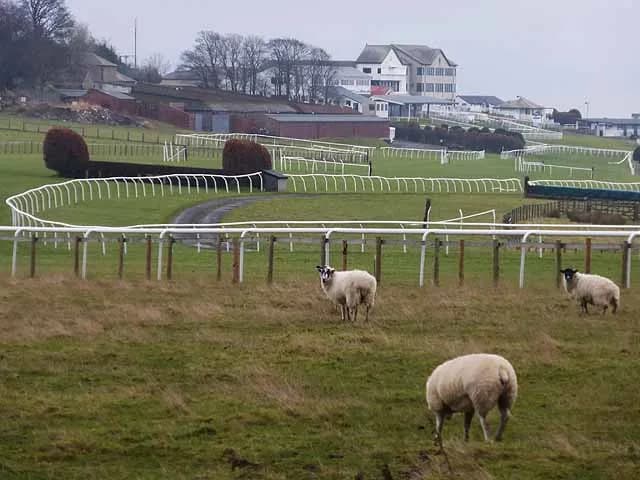
Henderson's vision extended beyond mere commerce. In 1907 he purchased the racecourse land outright and planted the copper beech hedge wings that remain a distinctive feature today. That same year saw the first running of the Heart of All England Cup, presented by the Town and Trade of Hexham and now the course's premier event.
Ancient Roots, Modern Purpose
Whilst the formal racecourse dates from 1890, racing in the Hexham area stretches back centuries. A title deed from 9 August 1670 makes reference to a "green way" track, suggesting the area's suitability for equine pursuits was recognised long before Henderson's arrival.
More concrete evidence emerges from the eighteenth century. Records show a purse of £20 was available at Tyne Green on 3 May 1738, and a three-day meet in 1793 offered £50 in prize money. These early gatherings established a racing tradition that Henderson would formalise and expand upon.
The Hexham course also played a role in culinary history. Hannah Glasse, the renowned author of "The Art of Cookery Made Plain and Easy," lived in the area and found herself entangled in the rivalry between Hexham and nearby Wark races. Her contemporary Ann Cook, whose own cookbook was published in 1754, dedicated her work to Henderson's ancestor Sir Lancelot Allgood in a pointed rebuke to Glasse. Such literary spats demonstrate how deeply racing had embedded itself in local culture.
The Testing Terrain
Hexham's reputation rests partly upon its challenging topography. The left-handed circuit measures one and a half miles and features ten fences for steeplechase events. A steep climb from the end of the back straight to the finish line tests the stamina of even seasoned chasers, whilst the 250-yard run-in with zero gradient provides a fair conclusion to each contest.
The course's elevation of 800 feet at High Yarridge brings practical consequences. No racing occurs during January or February, as the exposed northerly location makes conditions unsuitable. Fixtures are instead concentrated between March and June and September through December, ensuring the ground remains raceable.
This distinctive character has earned Hexham recognition as "the most scenic racecourse in the country" and "the most visually stunning racecourse in the land." Such plaudits reflect both the natural beauty of its Northumberland setting and the careful stewardship that has preserved its charm.
War, Survival, and Resilience
The course's survival through the twentieth century is itself a story of perseverance. When Charles Henderson died in 1914, ownership passed to his son Stephen, who incorporated the operation as a private limited company. Racing continued between the wars with substantial improvements and additions during the 1930s.
The Second World War brought an abrupt interruption. The War Department requisitioned the course as an ammunition depot, transforming the sporting venue into a military installation. William Patterson protected the company's interests throughout this period, ensuring the racecourse would eventually return to its intended purpose.
Racing resumed in 1946, with Kit Patterson, William's son, assuming management duties. Patterson would guide Hexham for more than four decades, earning recognition as "one of the great men of Northern Racing." His tenure established traditions that continue to shape the course today.
The Enderby Era and Beyond
In 1990, Major Charles Enderby, great-grandson of the founder, took the helm following a military career spanning more than twenty years across Cyprus, Northern Ireland, and Germany. Enderby brought both family continuity and fresh perspective to the operation, having served as clerk of the course and in various other racing roles.
During his stewardship, Enderby invested more than £500,000 in major improvements over the final decade of his tenure. His efforts were recognised when Hexham was voted "Small Racecourse of the Year 2015" for Scotland and the North by the Racegoers Club.
The 125th anniversary in 2015 marked a turning point. In 2016, the racecourse was sold to Hexham and Northern Marts, a local company with a history stretching back more than a century. The sale ensured the course remained in local hands, with all staff retained and a commitment to continued investment funded by proceeds from the mart's land sale at Craneshaugh. Jimmy Walton, the mart's chairman and a successful amateur rider with 85 point-to-point winners and 129 victories under Rules, now oversees operations alongside groundsman Mark Cameron, described as "one of the best in the entire industry."
Royal Recognition and the Future
Hexham's status received national affirmation in June 2025, when Queen Camilla visited to officially open the Queen Camilla Stand. The royal visit, the first since King Charles attended in 2018, brought renewed attention to this independent northern venue.
The racecourse maintains its community connections through diversified operations. Beyond racing, the site hosts a holiday park with static caravans, a caravan and camping site, Racecourse Lodge accommodation, and facilities for weddings, conferences, and point-to-point meetings.
Broadcast on Sky Sports Racing, Hexham continues to offer fixtures that attract competitors and spectators alike. The late Queen Elizabeth II's horse No Trumps won at the course in 2019, adding royal racing credentials to the venue's distinguished history.
From its founding by an ambitious Durham carpet manufacturer through two world wars, family stewardship across four generations, and its transition to community ownership, Hexham Racecourse embodies the resilience and character of Northumberland itself. At 800 feet above sea level, with its copper beech wings still marking the course and its steep finish still testing champions, it remains what Charles Henderson envisioned more than 130 years ago: a proper test of horse and rider, set amongst the finest scenery England has to offer.